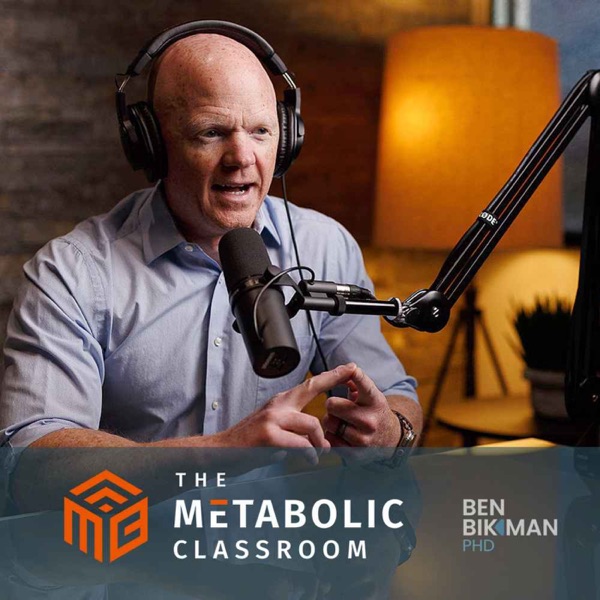
The Metabolic Classroom with Dr. Ben Bikman

Insulin IQ製作的The Metabolic Classroom with Dr. Ben Bikman

Insulin IQ

Welcome to The Metabolic Classroom, a nutrition and lifestyle podcast focused on metabolism, which is how our bodies use energy, and the truth behind why we get sick and fat. Every week, Dr. Ben Bikman shares valuable insights that you can apply in your own life and share with friends and loved ones. The Metabolic Classroom is brought to you by BenBikman.com and InsulinIQ.com.


Hosted on Acast. See acast.com/privacy for more information.

分类: 健康

听听最后一集:

📢 Ask Dr. Bikman’s Digital Mind (multilingual):

https://benbikman.com/ben-bikmans-digital-ai-mind


📢 Dr. Bikman’s Community & Coaching Site: https://insuliniq.com


Summary:

GLP-1 has become one of the most talked-about hormones in modern medicine, largely due to the rise of GLP-1 receptor agonist drugs for weight loss. In this lecture, Dr. Ben Bikman shifts the focus from how GLP-1 affects insulin to the overlooked reverse question: how insulin affects GLP-1. That shift reveals a deeper metabolic story about how chronic hyperinsulinemia may impair the body’s ability to produce GLP-1 over time.


Dr. Bikman first clarifies a key misconception. While GLP-1 can stimulate insulin under artificial conditions, in a real meal its dominant role is to slow gastric emptying, suppress glucagon, and reduce the need for insulin. In that sense, GLP-1 functions primarily as an insulin-sparing hormone. This makes the reverse question critical: what happens when the body produces less GLP-1?


Evidence shows that insulin-resistant, obese, prediabetic, and type 2 diabetic individuals consistently have a blunted GLP-1 response. Mechanistic studies indicate that chronic exposure to high insulin can make L-cells insulin resistant, reducing their ability to secrete GLP-1 when needed. This may create a vicious cycle: high insulin suppresses GLP-1, low GLP-1 removes metabolic brakes, and the resulting larger glucose and insulin spikes further worsen the problem over time.


The lecture reframes GLP-1 deficiency as a potential consequence of chronic hyperinsulinemia rather than an isolated defect. While GLP-1 drugs can bypass this dysfunction and improve outcomes, they do not repair the underlying cause—making long-term strategies that lower chronically elevated insulin levels more fundamental.


References:

For complete show notes and references, we invite you to become an Insider subscriber. You’ll enjoy real-time, livestream Metabolic Classroom access which includes live Q&A with Ben after the lecture, unlimited access to Dr. Bikman’s Digital Mind, ad-free podcast episodes, show notes and references, and Ben’s Weekly Research Review Podcast. Learn more: https://www.benbikman.com


NOTE: The information presented is not intended to be a substitute for professional medical advice, diagnosis, or treatment. Dr. Bikman is not a clinician—and, he is not your doctor. Always seek the advice of your own qualified health providers with questions you may have regarding medical conditions.


Hosted on Acast. See acast.com/privacy for more information.

以前的剧集

  • 145 - How Insulin May Be Silencing Your GLP-1 
    Mon, 13 Apr 2026 - 0h
  • 144 - Why Creatine Is One of the Most Important Brain Nutrients 
    Mon, 06 Apr 2026 - 0h
  • 143 - Why Gum Disease Raises Your Blood Sugar 
    Mon, 30 Mar 2026 - 0h
  • 142 - Ivermectin Explained: The Science Behind the Controversy 
    Mon, 23 Mar 2026 - 0h
  • 141 - How Sleep Loss Rewires Your Hunger Hormones 
    Mon, 16 Mar 2026 - 0h
显示更多剧集

更多中文 健康 podcasts

更多国际 健康 podcasts

選擇 Podcast 類型